Building Uganda's Future
Education is one of Uganda's top national priorities. The government introduced Universal Primary Education (UPE) in 1997 and Universal Secondary Education (USE) in 2007, dramatically increasing school enrolment across the country.
Today, Uganda has one of the fastest-growing education sectors in East Africa, with thousands of primary schools, hundreds of secondary institutions, and over 50 universities and tertiary colleges.
The literacy rate has climbed significantly over recent decades, reaching approximately 79% overall, with younger age groups showing even higher rates thanks to expanded access to schooling.
Uganda's Education System
Pre-Primary
Early Childhood Development (ECD) centres provide foundational learning for Uganda's youngest children. Enrolment has increased dramatically in recent years.
Primary School
Seven years of primary education, culminating in the Primary Leaving Examination (PLE). Free under Universal Primary Education policy.
Secondary School
O-Level (4 years) and A-Level (2 years) secondary education. Free government schools available under Universal Secondary Education.
Tertiary & University
Uganda has 50+ universities and vocational institutions. Makerere University (est. 1922) is East Africa's oldest and most prestigious institution.
Leading Universities
Makerere University
East Africa's oldest and most prestigious university, located in Kampala. Ranked among the top African universities, offering programmes across all major disciplines.
Uganda Martyrs University
A leading private university in Nkozi, known for strong programmes in business, social sciences, and health sciences. Affiliated with the Catholic Church.
Mbarara University of Science & Technology
Specialises in science, technology, engineering, and medicine. A key institution for producing healthcare professionals and engineers in western Uganda.
Gulu University
Serving northern Uganda, Gulu University focuses on community development, agriculture, medicine, and peacebuilding — crucial for post-conflict recovery.

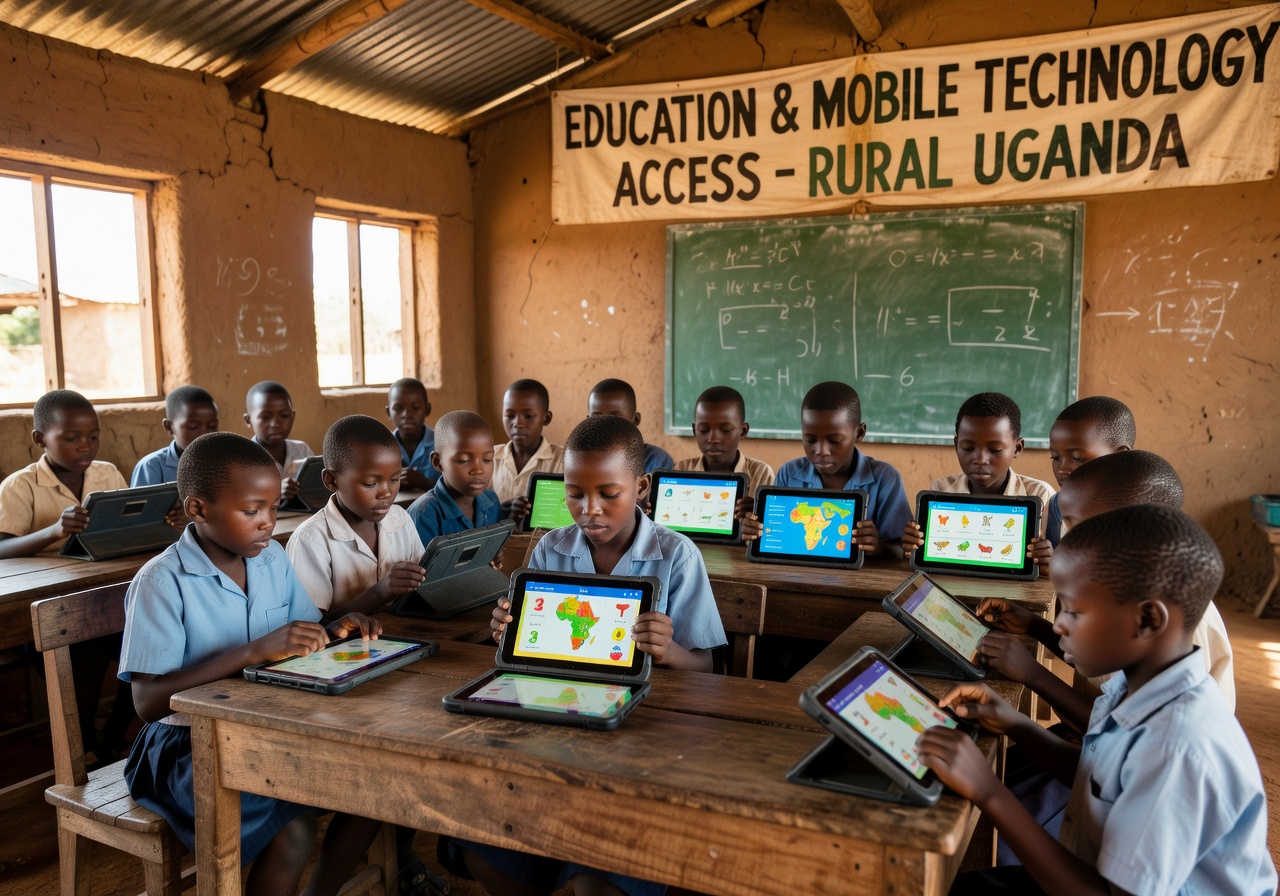
Digital & Mobile Learning
With mobile phone penetration exceeding 70% in Uganda, digital education platforms are transforming learning — particularly in rural areas where physical infrastructure is limited.
Platforms delivering curriculum content, teacher training resources, and examination preparation via SMS and basic smartphones are making a significant impact across Uganda's education landscape.
Key Education Challenges
Despite significant progress, Uganda's education sector continues to face important challenges that require innovative solutions.
Infrastructure Gaps
Many rural schools lack adequate classrooms, furniture, and sanitation facilities. Investment in school infrastructure remains a priority.
Digital Divide
Internet access in rural Uganda remains limited, creating disparities in access to digital educational resources and online learning.
Teacher Shortage
A shortage of qualified teachers — particularly in STEM subjects and in remote areas — affects educational quality and learning outcomes.
Gender Equity
While gender gaps have narrowed significantly, girls' completion rates in secondary school and university still trail behind boys in some regions.